Read the whole tender, then carry it into delivery.
Turn a tender document set into nine native registers, draft RFIs from the conflicts it finds, and, when you win, promote the warranty, programme, requirements and inspection registers straight into the delivery project.
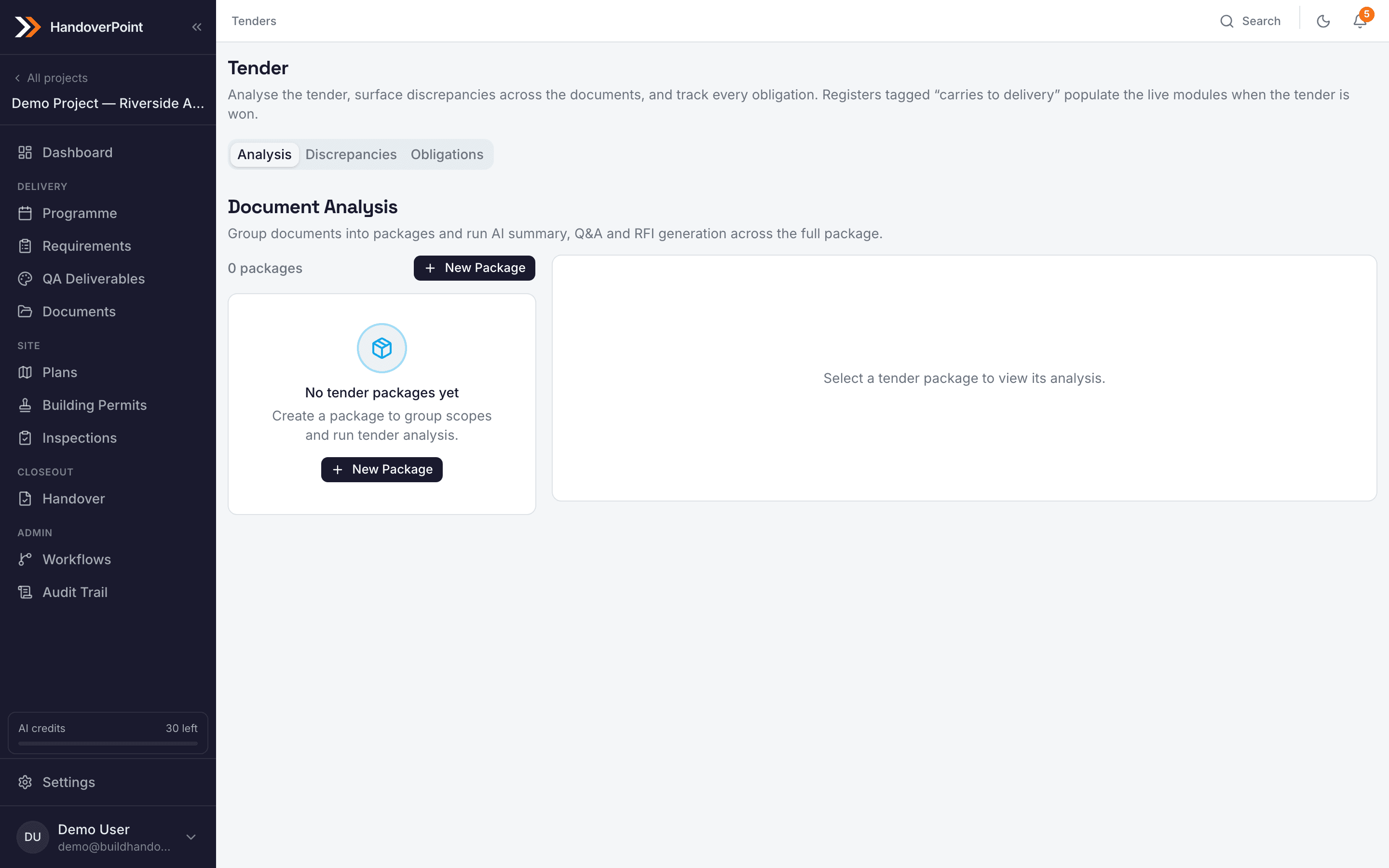
Tender analysis, with native registers built from the tender documents.
The tender review, done once and reused
Instead of a one-off read that lives in someone's notes, the analysis becomes structured registers you can act on and carry forward.
Nine native registers from the documents
The tender set is read into nine purpose-built registers: document requirements, cross-check and clash analysis, contract references, town planning conditions, spec versus drawings, warranties, programme, requirements and test and inspection points.
RFI generator for the gaps it finds
Where the documents conflict or leave a question open, the RFI generator drafts the query for you. Turn a clash or an ambiguous clause into a written RFI without starting from a blank page.
Carry registers into delivery when you win
Win the job and the warranty, programme, requirements and inspection registers promote straight into the delivery project. The review work you did at tender becomes the backbone of the build.
Summarise and question the whole set
Summarise the tender package and ask questions across every document at once, so you understand the obligations and risks before you price the work.
The nine registers
Each register is built for a specific job in the review. Four of them carry into your delivery project when you win the tender.
How it works
Upload the tender set
Add the tender documents to the tender workspace. The analysis reads across the whole set, not one file at a time.
Build the registers and RFIs
Generate the nine registers and draft RFIs from the conflicts and gaps the analysis surfaces.
Promote on win
When you win, carry the warranty, programme, requirements and inspection registers into the delivery project.